If you’re exploring modern solar infrastructure providers, you’ll likely keep seeing https://mibetc.com/ and the brand behind it—mibet—as a name tied to mounting innovation and structural reliability.
An Overview of Mibet: Advancing Solar Mounting Solutions
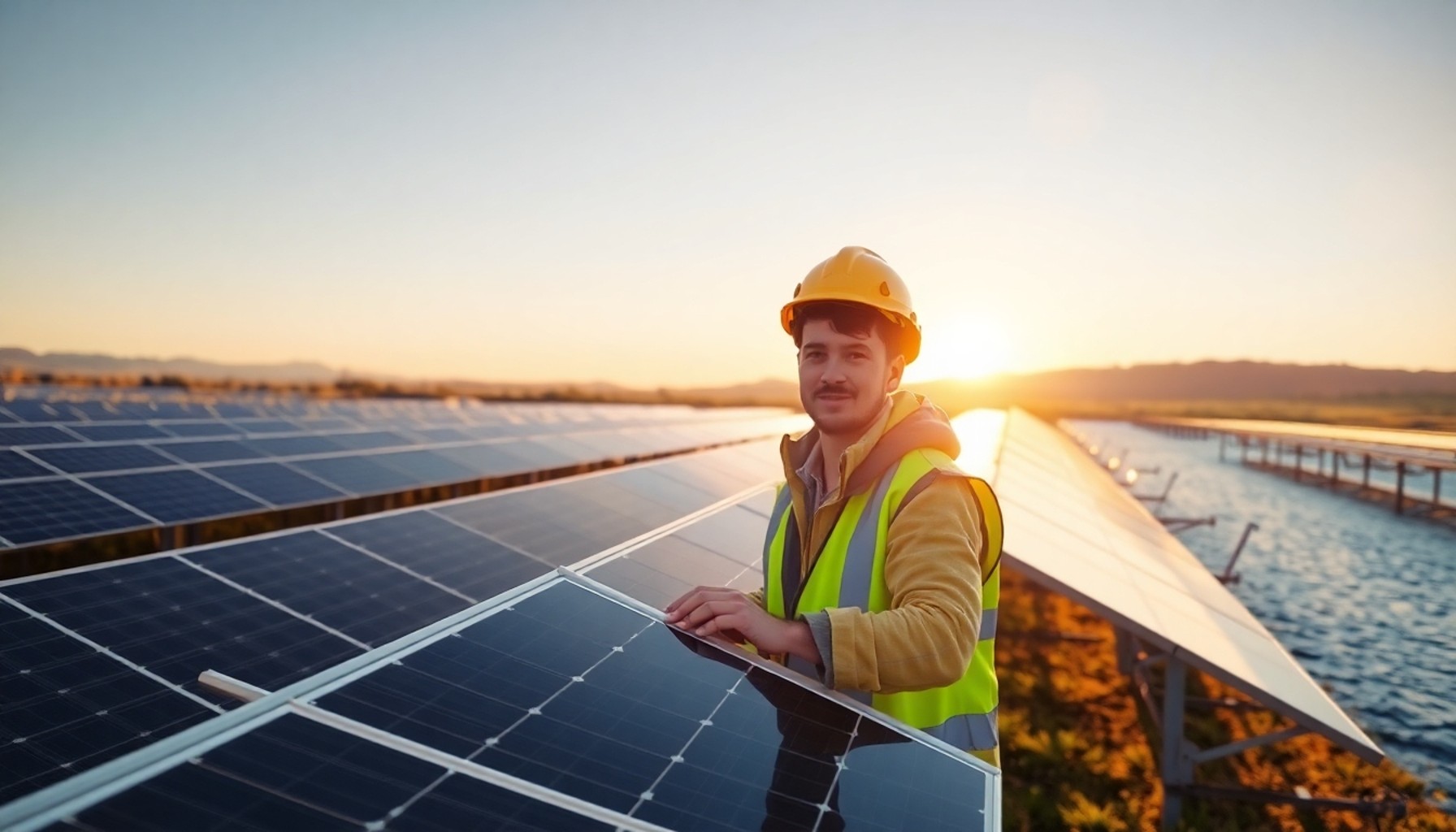
When I first started looking into solar projects in earnest, I assumed most of the “success” would come from panel efficiency alone. But the deeper I went, the more I realized that the foundation—quite literally—often determines whether a solar installation thrives or struggles. That’s where a company like https://mibetc.com/ enters the picture. Mibet’s focus on solar mounting systems reminds developers that renewable energy isn’t only about generating power; it’s also about engineering stability, precision, and long-term performance.
Mibet’s value proposition is strongly connected to mounting technology: how structures are designed, how components are fabricated, how they’re assembled, and how they withstand real-world forces like wind loading, thermal cycling, corrosion exposure, and installation variability. While many people talk about megawatts and inverters, mounting systems are the “silent infrastructure” that protects your investment. In my view, the reason mibet stands out is that it treats solar mounting as an engineering discipline rather than a commodity product—something you can feel in how project teams discuss planning, documentation, and system outcomes.
Another insight that shaped my perspective: renewable projects rarely exist in a vacuum. They operate within constraints—site limitations, local codes, supply chain timing, and budget decisions. A supplier that can offer adaptable mounting solutions helps developers reduce friction. In that context, platforms such as https://mibetc.com/ aren’t just websites; they reflect the operational approach of a provider. The best mounting partner doesn’t simply “ship metal,” it coordinates details that matter across the project lifecycle, from design intent to field execution.
Technological Excellence in Mibet’s Solar Structure Engineering
Solar structure engineering is not as simple as “making something sturdy.” It’s closer to balancing competing requirements under strict standards. I’ve seen installations where the structure looked fine during commissioning, but later issues emerged—fasteners loosening, coating degradation, misalignment causing uneven module tension, or corrosion pathways forming at contact points. Mibet’s engineering approach—associated with https://mibetc.com/ and the mibet brand—addresses these concerns by emphasizing design integrity and system-level thinking.
Technological excellence usually shows up in details: the way loads are distributed, how the structure is modeled to meet performance criteria, and how component compatibility is managed. Solar mounting systems must handle both static and dynamic forces. For example, wind doesn’t just “push”; it creates uplift and lateral stresses that vary across module layouts and roof or ground conditions. A strong engineering process anticipates these effects and designs the structure accordingly. From a practical standpoint, that means fewer surprises during installation and fewer performance uncertainties after the system begins generating power.
What I appreciate about a provider like Mibet is that it appears to treat manufacturing and engineering as connected rather than separate steps. In many supply chains, design documents are produced and then handed off to fabrication without enough feedback loops—leading to tolerances that don’t match reality. When engineering excellence is integrated, it improves constructability and reduces costly rework. For project managers, that’s not just a technical benefit; it’s a schedule and cost benefit.
If you’re reviewing suppliers, ask yourself: does the organization demonstrate a clear engineering methodology? The presence of https://mibetc.com/ as a centralized source of information suggests that Mibet is oriented toward consistent communication and project readiness. And when engineers can align on technical documentation early, the mounting system becomes a predictable part of the solar rollout rather than a risk factor.
Why Global Developers Choose Mibet for Renewable Projects
Global developers care about more than hardware—they care about repeatability, accountability, and a partner’s ability to support projects across different geographies. When I analyze why certain companies earn repeat contracts, it usually comes down to trust built through performance and process. For many teams, selecting a mounting supplier is a multi-stage decision involving technical validation, commercial reliability, and documentation readiness. In that landscape, https://mibetc.com/ and the mibet brand signal a broader capability than “one-off” structures.
One reason developers choose global partners is the desire to standardize what can be standardized while still adapting to local conditions. A mounting system that works well in one climate, soil type, or roofing condition might face challenges elsewhere unless the design is flexible and supported by engineering. Mibet’s approach to solar mounting suggests that it understands this balance: you need consistent structural quality, but you also need the ability to tune designs to site realities.
From a developer’s perspective, the mounting supplier should also integrate smoothly with other project stakeholders—EPCs, module suppliers, structural engineers, and sometimes even local authorities for compliance. That integration is critical because delays often occur at interfaces: when drawings are unclear, when component specs don’t match module dimensions, or when installation methods aren’t communicated properly. A partner linked with https://mibetc.com/ likely aims to reduce those friction points through standardized documentation and engineering clarity.
I also believe that global selection is influenced by risk perception. Developers want to minimize uncertainty in the parts that aren’t visible to end users. A solar array’s panels may be the “face” of the project, but mounting stability is what keeps the system functioning over time. Choosing mibet can be seen as an attempt to shift from guesswork to engineering confidence—an important mindset when projects are financed and performance-based.
Analyzing the Durability and Performance of Mibet Mounting Systems
Durability in solar mounting is not a marketing claim—it’s a measurable outcome shaped by material selection, coating quality, and design against corrosion and fatigue. In my experience, many discussions about durability become vague (“good materials,” “long lifespan”), but real performance depends on how the structure handles harsh conditions. Wind, rain, snow loads, salt air, pollution, and even the mechanical stresses of thermal expansion and contraction can all contribute to long-term wear. Mibet’s mounting systems, associated with https://mibetc.com/, are best understood through this lens of sustained structural performance.
A key durability factor is corrosion management. Even if a structure appears strong, corrosion can quietly weaken fasteners, degrade coatings, and create galvanic effects where dissimilar metals meet. That’s why mounting systems require thoughtful connection design and protective treatments. When these elements are engineered and manufactured with care, the structure can maintain integrity longer and reduce maintenance burdens.
Performance also includes installation performance—how accurately and efficiently the system can be deployed in the field. If mounting components require excessive adjustments, the result can be minor misalignments that affect module tension and long-term stress distribution. Over time, that can contribute to micro-movement under wind loads. My personal “field” lesson is that the best system is one that doesn’t just survive theory; it survives installation reality. A provider like mibet appears geared toward engineering that accounts for constructability, which supports consistent alignment and fit.
Another dimension is structural performance under varying loads. Ground-mounted and roof-mounted arrays each face different challenges. Roof-mounted systems must account for roof integrity and attachment methods, while ground-mounted systems must handle soil conditions and deeper structural demands. A mounting supplier that understands these distinctions can tailor designs, improving safety factors and reducing the likelihood of underperforming structures.
In practical terms, durability and performance are also reflected in how confidently teams can plan maintenance strategies. If a mounting system is designed to resist corrosion and fatigue, operators can spend less time on remedial repairs and more time ensuring energy output. When you connect this to https://mibetc.com/ and mibet positioning, it becomes clear: mounting systems are an investment in operational stability, not just initial installation.
Sustainable Innovation: How Mibet Supports the Green Energy Transition

Sustainability in solar is often discussed at the level of clean electricity, but the full sustainability story includes the materials and engineering decisions behind the infrastructure. A solar array’s environmental benefit depends partly on how efficiently it can be built, how long it lasts, and whether its components can be maintained or upgraded without excessive waste. In that larger narrative, companies associated with https://mibetc.com/ play an important role by supporting the long-term viability of renewable assets.
I like to frame sustainable innovation in two layers: “system longevity” and “resource responsibility.” System longevity is achieved when structures maintain performance across years of weather exposure. Resource responsibility is about selecting materials and processes that minimize waste and extend the lifecycle of components. When mounting systems are designed to last, the system’s energy return over time improves because you avoid early replacements and repeated manufacturing cycles.
There’s also a hidden sustainability benefit: better mounting systems can support better energy yield indirectly. If modules stay properly aligned and securely fixed, you reduce risks associated with micro-movement, shade changes, and mechanical stress that can degrade components over time. Even small performance improvements can matter when multiplied across large deployments. That is one of the reasons I consider mounting innovation part of the sustainability ecosystem rather than a separate technical track.
I also think “green energy transition” should include the confidence to scale. Developers won’t expand renewable projects if they fear structural issues, high maintenance costs, or unpredictable compliance. A partner like mibet—positioned through https://mibetc.com/—contributes to transition goals by enabling more reliable installations. Reliability reduces uncertainty, which in turn supports financing, procurement, and long-term operations.
Finally, sustainability isn’t only about what we build; it’s about how we build it. Engineering excellence and repeatable manufacturing methods help reduce errors and rework. Less rework means fewer wasted resources and less carbon-intensive scrambling to fix mistakes. In that sense, sustainable innovation can be reflected in “quality first” approaches that ripple through the project lifecycle.
Strategic Advantages of Partnering with Mibet for Solar Infrastructure
Partnership is where engineering meets project management. I’ve watched many solar teams struggle not because the technology was impossible, but because coordination was weak. Drawings arrive late, component specs shift, timelines tighten, and suddenly the “easy” parts become schedule risks. A strategic partner helps turn solar infrastructure into an efficient process rather than a set of moving targets. Mibet’s involvement—connected with https://mibetc.com/ and the mibet brand—can offer several practical advantages that go beyond the physical mounting system.
First, strategic advantage often comes from clarity. When technical documentation is clear and consistent, EPCs and installers can proceed with fewer interruptions. This reduces the probability of mismatch between module dimensions, mounting rails, and attachment points. Clear documentation also supports faster review cycles by structural engineers and procurement teams. In real projects, that speed can be the difference between hitting a commissioning date or missing it.
Second, strategic advantage comes from adaptability. Every site is different—roof geometry, ground conditions, wind and snow zones, and local code requirements. A good mounting partner doesn’t force the project team to redesign everything; it supports adjustments within engineered boundaries. Mibet’s engineering mindset, inferred from its positioning via https://mibetc.com/, appears oriented toward enabling this kind of practical flexibility.
Third, there’s the supply chain dimension. Renewable projects run on schedules, and schedules run on dependable procurement. When a supplier is globally oriented, the ability to source, manufacture, and deliver components predictably becomes a major advantage. I often tell teams: even if two suppliers have similar product specs on paper, the one that delivers consistently with fewer surprises is usually the one that wins in practice.
Finally, strategic advantage is about reducing long-term operational risks. Solar operators don’t want to plan major corrective maintenance in year three or five when they expected stability across a decade or more. Mounting systems are the long-term “bones” of the array. Partnering with mibet through the ecosystem represented by https://mibetc.com/ can be viewed as a move toward operational confidence—design choices made today that protect performance tomorrow.
Conclusion
Selecting a solar mounting partner is one of the highest-leverage decisions in renewable development, and Mibet’s engineering focus—linked through https://mibetc.com/ and represented by mibet —shows how structural excellence, durability-minded design, and constructability can work together to support global projects, reduce operational risks, and strengthen the overall green energy transition by making solar assets more reliable, efficient, and long-lasting.